Source Elevator Door Knife for Car, Landing, and Public Traffic
Find 30 elevator door knife options for car and landing doors in public traffic settings. Compare AC and hydraulic drive modes, signal control systems, and metal materials from Chinese manufacturers to select the right part for your elevator maintenance needs.
Key considerations
Products List







Comprehensive Sourcing Guide
Elevator Door Knife Sourcing Guide
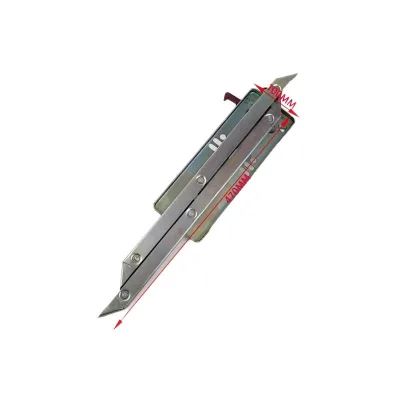
Procurement professionals must first distinguish between the specific mechanical component known as the elevator door knife and the broader elevator door system assemblies. The supplied market data indicates that listings often feature the "Elevator Door Knife" as a standalone part, sometimes described with specific model identifiers like "Fed-0701" or "Do2000 Dcss5." Buyers should recognize that while some vendors list these items under general "Elevator Door System" categories, the core function remains the mechanical actuation or locking mechanism for the door leaves. Understanding this distinction is critical before initiating a search, as confusing a single knife component with a full operator system can lead to specification errors and incompatible orders.
When evaluating the initial product scope, buyers must carefully parse the observed listing signals to ensure the item matches their specific elevator architecture. The available data reveals a mix of attributes, including "AC Elevator" driving types and "Hydraulic" drive modes, suggesting that the door knife must be compatible with varying lift mechanisms. Furthermore, the presence of "Single" door knives alongside "Sider Door" configurations implies that the physical geometry of the knife is a primary selection criterion. Sourcing teams should verify whether the listed product is a generic "General" brand part or a specific "Original" component like those associated with "Kone," as this distinction directly impacts fitment and operational safety in existing installations.
Technical Specifications to Verify
Buyers must rigorously verify the drive mode compatibility, as the market data presents conflicting or varied specifications such as "AC," "Hydraulic," and "DCSS" drive modes. The elevator door knife is a mechanical interface that must synchronize with the specific lift mechanism, whether it utilizes a "Lift Chain" or a "Telescoping Lift" system. A mismatch in drive mode compatibility can result in mechanical failure or unsafe door operation. Procurement teams should request detailed engineering drawings or compatibility matrices from suppliers to confirm that the specific knife model, such as "Km602494G04," is designed to function correctly with the target elevator's drive system and control logic.
The physical dimensions and control logic of the door knife are equally critical for successful integration into the elevator car or landing. The observed listings mention "Signal Control" and "Microcomputer Control" modes, indicating that the door knife may interact with complex electronic systems beyond simple mechanical movement. Buyers need to confirm the "Control Type" and ensure the component aligns with the existing "Relay Control" or advanced microcomputer architectures of their facility. Additionally, the "Persons" capacity and "Speed" ratings of the elevator, ranging from 1.00 to 3.50m/s, influence the stress and timing requirements of the door knife, necessitating a precise match between the component's rated performance and the elevator's operational parameters.
Compliance and Safety Documentation
Safety compliance is paramount when sourcing elevator components, as the door knife is a critical safety element in preventing entrapment and ensuring secure door closure. The supplied facts reference the "ISO7465" standard, which buyers should treat as a key verification point for the specific product's manufacturing and testing protocols. While general industry knowledge suggests adherence to broader safety frameworks, procurement teams must explicitly request documentation proving that the specific door knife model meets the cited standard or equivalent local regulations. Relying on unverified claims of compliance can expose the facility to significant liability and operational risks.
Beyond the specific standard, buyers must ensure that the supplier provides comprehensive safety documentation regarding the material integrity and functional reliability of the door knife. The product is described as being made of "Metal," but the specific alloy and heat treatment processes are not detailed in the general listings. Procurement teams should demand material test reports and certification of the manufacturing process to verify that the metal composition can withstand the repeated mechanical stress of door operation. Without this documentation, the risk of premature wear or catastrophic failure increases, potentially compromising the safety of passengers and maintenance personnel.
Cost Drivers and Commercial Terms
The cost of elevator door knives is influenced by several factors, including the specific model complexity, brand origin, and the level of customization required. The observed price range in the market spans from $0.99 to $11,980, a variance that likely reflects differences between generic replacement parts and specialized, high-performance components for specific elevator brands like "Kone." Buyers should analyze whether the low-cost options are generic "General" brand parts or if the higher price points correspond to "Original" manufacturer parts with guaranteed compatibility. Understanding this price spectrum helps in budgeting and prevents the selection of under-specification parts that may fail prematurely.
Commercial terms such as Minimum Order Quantity (MOQ) and shipping logistics also play a significant role in the total cost of ownership. The data indicates an MOQ range of 1 to 20 units, offering flexibility for small repair projects or larger renovation contracts. Shipping methods vary from "Sea/Air" to express couriers like "DHL/FedEx/TNT," which will impact both the lead time and the final landed cost. Procurement teams must calculate the total cost by factoring in these shipping variables, especially for urgent replacements where air freight might be necessary despite the higher expense. Additionally, the "Standard Export Packing Box" or "Export-Applicable Tray" packaging should be confirmed to ensure the parts arrive without damage during transit.
Supplier Qualification and Quality Control
Supplier qualification is a critical step, as the market data identifies the business type as "Manufacturer," suggesting a direct source for the components. However, buyers must verify the specific capabilities of the manufacturer to ensure they can produce the exact specifications required, such as the "Door Knife Fed-0701" or "Elevator Door Knife Starting Lever." It is essential to confirm that the manufacturer has the necessary tooling and quality control processes to maintain consistency across batches. Relying on a supplier without verified manufacturing capabilities can lead to inconsistencies in part dimensions and material quality, which are unacceptable for safety-critical elevator components.
Quality control procedures must be established to validate the incoming door knives against the required technical specifications. Buyers should implement a rigorous inspection protocol that checks the "Material" composition, "Model" accuracy, and "Packing" integrity upon receipt. The presence of various model numbers like "Dpp-131" and "Fed-0701" in the listings highlights the need for precise part identification to avoid receiving the wrong component. Establishing a clear acceptance criteria based on the supplier's provided specifications and the elevator's operational requirements will help mitigate the risk of installing defective parts that could compromise the elevator's safety and performance.
Long-Term Procurement Checks
Long-term procurement success depends on establishing a reliable supply chain that can support ongoing maintenance and future replacements. Buyers should prioritize suppliers who offer consistent availability of specific models like "Km602494G04" and "Fed-0701" to ensure that spare parts are accessible when needed. The "Customization: Available" attribute suggests that some suppliers can adapt parts to specific needs, which is valuable for older elevator systems where standard parts may no longer be in production. Developing a relationship with a supplier capable of customization can provide a strategic advantage in maintaining legacy elevator fleets.
Continuous monitoring of supplier performance and product quality is essential to maintain the safety and reliability of the elevator system over time. Procurement teams should regularly review the supplier's adherence to the "ISO7465" standard and their ability to provide updated technical documentation. It is also important to track the performance of the installed door knives in the field, noting any issues related to wear, material fatigue, or control system integration. By maintaining a proactive approach to supplier management and product monitoring, organizations can ensure the long-term operational integrity of their elevator door systems and minimize the risk of unexpected downtime.
FAQs
What is the standard speed range for AC elevator door knives?
The standard speed range for these AC elevator door knives is 2.00 to 3.50 meters per second. This specification ensures efficient operation for high-rise buildings. The system utilizes signal control and operates without an attendant, making it suitable for modern automated elevator installations requiring reliable performance.
Can elevator door knives be customized for specific building requirements?
Yes, elevator door knives are available for customization to meet specific building requirements. Manufacturers offer tailored solutions to ensure compatibility with existing elevator systems. This flexibility allows buyers to select appropriate models, such as the Fed-0701 or Do2000 Dcss5, ensuring optimal integration and functionality for diverse architectural needs.
What is the minimum order quantity for elevator door knife parts?
The minimum order quantity for elevator door knife parts is typically one unit. This low MOQ allows buyers to test product quality before placing larger orders. Suppliers often provide standard export packing or case packaging to ensure safe transit. This flexibility supports both small-scale repairs and larger procurement projects efficiently.
Which materials are used to manufacture durable elevator door knives?
Elevator door knives are primarily manufactured using high-quality metal materials to ensure durability and longevity. The robust construction withstands frequent use in public traffic environments. These components are designed to operate reliably within elevator systems, providing consistent performance and safety for both passengers and building operators over extended periods.
How are elevator door knives shipped to international buyers?
Elevator door knives are shipped via sea or air freight to international buyers. Some suppliers also offer express courier services like DHL or FedEx for urgent orders. Products are packed in standard export boxes or trays to prevent damage during transit. This flexible shipping approach ensures timely delivery and secure handling of sensitive elevator components worldwide.